
When someone first tells you that injecting platelet-rich plasma into your penis can improve erectile dysfunction, your immediate reaction is probably somewhere between sceptical and outright alarmed.
That’s completely understandable. And it’s exactly why the safety question deserves a proper, thorough answer — not a glossy paragraph buried at the bottom of a clinic’s marketing page.
So let’s go through it properly. What does the actual evidence say? What do medical bodies think? And what should you genuinely watch out for before booking anything?
What the P-Shot Actually Involves — A Quick Recap
Before we get into the safety data, it helps to be clear on what the procedure involves.
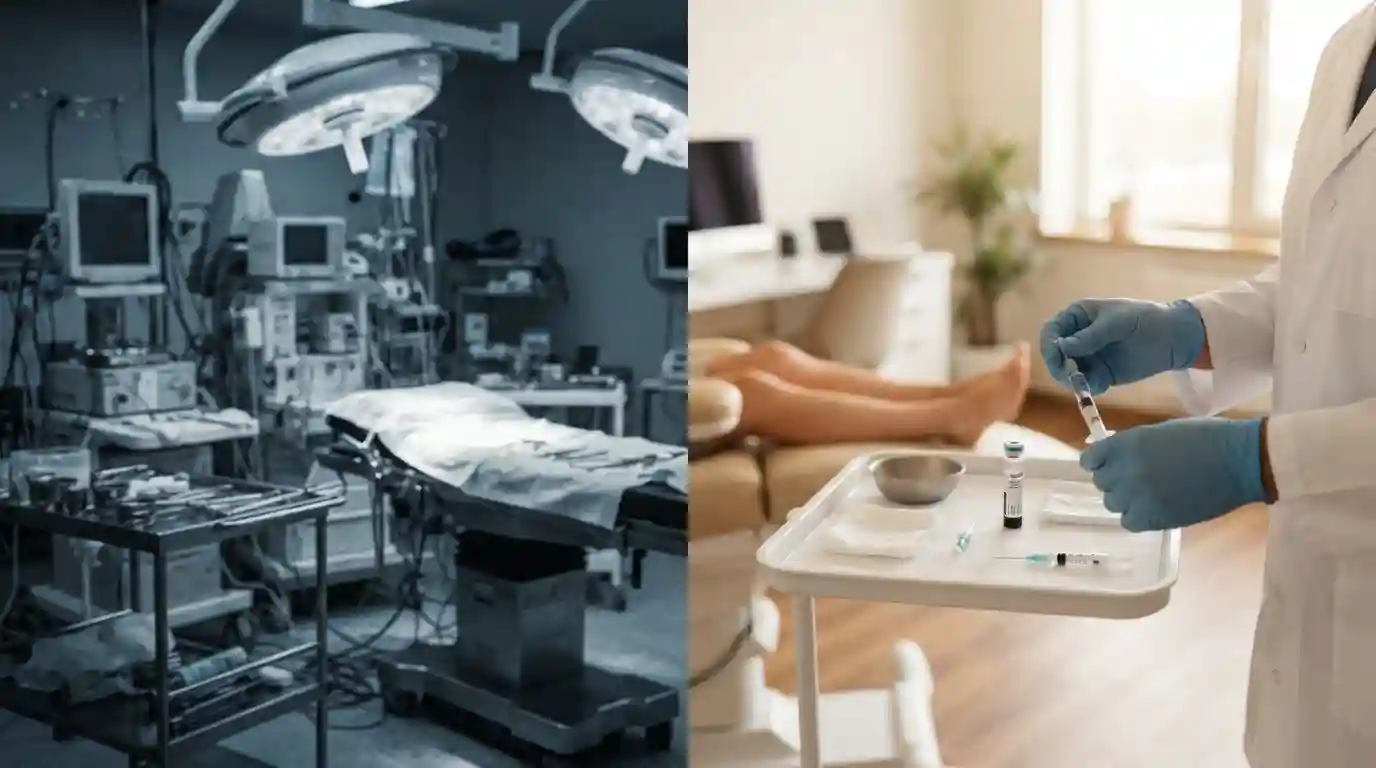
The P-Shot uses platelet-rich plasma (PRP) — a concentrated solution derived from your own blood. A small blood sample is drawn from your arm, spun in a centrifuge to isolate the plasma, and then injected into specific areas of the penis.
Because the treatment uses your own biological material rather than a synthetic drug or foreign substance, it sits in a different risk category to many other medical interventions from the outset. Your body already recognises the plasma — it produced it.
That said, “natural” doesn’t automatically mean risk-free. So let’s look at what the evidence actually tells us.
What Does the Clinical Evidence Say?
PRP therapy as a whole has been studied extensively across multiple medical disciplines — orthopaedics, dermatology, dentistry, and wound healing — for well over two decades. The safety profile in these fields is well established and generally very positive.
For the P-Shot specifically — that is, PRP applied to erectile dysfunction and penile health — the evidence base is smaller but growing meaningfully.
Here are some key studies worth knowing about:
Matz et al. (2018) — Journal of Sexual Medicine A systematic review published in the Journal of Sexual Medicine examined the use of PRP for erectile dysfunction. The authors found that PRP demonstrated promising results in improving erectile function, with no serious adverse events reported across the studies reviewed. The review called for larger, randomised controlled trials to strengthen the evidence base — which is the standard scientific ask when a treatment is relatively new.
Epifanova et al. (2020) — Urologia This Russian clinical study looked at PRP injections in men with erectile dysfunction. Patients reported significant improvements in erectile function scores at follow-up, and no severe complications were documented during the trial period.
Towe et al. (2021) — Sexual Medicine Reviews This review specifically examined PRP for Peyronie’s disease — the condition where scar tissue causes a curved or painful erection. The authors found that PRP showed genuine potential in reducing penile curvature and pain, with a favourable safety profile across the studies examined.
Scott et al. (2019) — Translational Andrology and Urology This paper reviewed regenerative therapies for erectile dysfunction, including PRP. It concluded that while the evidence is encouraging and safety signals are positive, standardisation of PRP preparation and injection protocols is still needed across the field.
The consistent theme across the literature? Serious adverse events are rare, and the most commonly reported side effects are mild and temporary. No study to date has flagged a systemic safety concern specific to PRP use in this context.
What Are the Actual Side Effects?
Being straightforward about this matters — so here’s what men actually experience:
Common and temporary:
- Mild swelling at the injection site — usually settles within 24 to 72 hours
- Light bruising around the treated area
- Temporary sensitivity or tenderness
- Occasional mild redness or warmth
Uncommon:
- Minor bleeding at the injection point
- Temporary changes in sensation immediately after the procedure
- Mild discomfort during erection in the first few days
Rare:
- Infection — extremely uncommon when the procedure is performed in a sterile clinical environment
- Haematoma (localised pooling of blood) — rare and typically resolves on its own
- Prolonged swelling beyond the expected window
What you won’t typically see: Because PRP uses your own blood, you won’t encounter allergic reactions, immune rejection, or the systemic side effects associated with pharmaceutical ED treatments — things like headaches, flushing, visual disturbances, or cardiovascular effects that some men experience with medications like Viagra or Cialis.
What Do Medical Regulatory Bodies Say?
This is where we need to be genuinely transparent with you — because the picture is more nuanced than some clinics let on.
In the UK, the P-Shot is not currently approved by the Medicines and Healthcare products Regulatory Agency (MHRA) as a licensed medical treatment for erectile dysfunction. This doesn’t mean it’s banned or illegal — it means it sits within the category of medical procedures that are performed under clinical discretion rather than formal drug licensing.
PRP therapy broadly is widely accepted and practised across the NHS and private sector for other conditions — knee osteoarthritis, hair loss, and wound healing, for example. The regulatory gap is specifically around the formal licensing of PRP for sexual medicine indications.
The British Association of Urological Surgeons (BAUS) and the British Society for Sexual Medicine (BSSM) have not yet issued formal clinical guidelines endorsing the P-Shot specifically, largely because the evidence base — while promising — hasn’t yet reached the volume and standardisation required for formal guideline inclusion.
In the United States, the FDA issued a statement in 2019 warning consumers about unapproved PRP procedures marketed for sexual enhancement, specifically targeting clinics making unsubstantiated claims. This wasn’t a safety recall — it was a regulatory reminder that marketing claims need to be supported by approved evidence. The FDA statement was directed at misleading marketing, not at condemning PRP science itself.
What this means practically: The P-Shot is a legitimate medical procedure grounded in real science, but it operates in a regulatory space that is still catching up with the practice. That makes choosing a qualified, experienced, and transparent practitioner absolutely critical.
The Practitioner Question — Why This Matters More Than Anything Else
If there is one safety factor that outweighs all others when it comes to the P-Shot, it’s this: who is performing the procedure.
PRP therapy requires proper training in blood processing, sterile technique, and injection anatomy. When performed by a qualified clinician in a proper clinical environment, the risk profile is low. When performed by an unqualified practitioner in an unregulated setting — which, unfortunately, does happen as these treatments grow in popularity — the risk increases significantly.
Here’s what to look for when choosing a clinic:
- The procedure is performed by a registered doctor, nurse practitioner, or qualified medical professional — not a beauty therapist or aesthetician
- The clinic operates in a regulated clinical environment with proper sterile protocols
- The practitioner has specific training and experience in PRP procedures and sexual medicine
- A full medical consultation is carried out before the procedure — including a review of your medical history, current medications, and any contraindications
- The clinic is transparent about realistic outcomes and doesn’t promise guaranteed results
- They are registered with the Care Quality Commission (CQC) if operating as a clinic in England
Red flags to walk away from:
- Clinics that offer the P-Shot as part of a beauty or aesthetics menu alongside facials and fillers
- No proper medical consultation before booking
- Guarantees of specific results
- Unusually low prices with no explanation
- No clear information about who is performing the procedure and their qualifications
Who Should Not Have the P-Shot?
The P-Shot is not suitable for everyone, and a responsible practitioner will screen for contraindications thoroughly. You should generally avoid the P-Shot if you have:
- Active infection — anywhere in the body, but particularly in the pelvic or genital area
- Blood disorders — including thrombocytopenia (low platelet count) or conditions affecting platelet function
- Active cancer — particularly haematological cancers like leukaemia or lymphoma, where stimulating cell growth could be harmful
- Anticoagulant medication — blood thinners like warfarin can affect platelet function and increase bleeding risk
- Severe anaemia — inadequate blood volume can affect the quality of the PRP produced
- Certain skin conditions — active psoriasis or eczema in the treatment area
This is precisely why a proper medical consultation is non-negotiable. A clinician who skips this step is a clinician you should not be trusting with this procedure.
How Does Its Safety Profile Compare to Other ED Treatments?
It’s worth putting the P-Shot’s safety profile in context against the alternatives:
Oral medications (Viagra, Cialis): Widely used and well-studied, but carry cardiovascular risks for some men, can cause headaches, flushing, visual changes, and nasal congestion. Not suitable for men taking nitrate medications due to dangerous blood pressure interactions.
Penile injections (Alprostadil): Effective but involve self-injecting a vasoactive drug directly into the penis before sexual activity. Risks include prolonged erection (priapism), scarring with repeated use, and pain at the injection site.
Vacuum erection devices: Non-invasive but mechanical. Provide an erection without addressing underlying causes. Can feel cumbersome and affect spontaneity.
Penile implants: Surgical option for severe ED. Highly effective but carries all the risks of surgery — anaesthetic complications, infection, mechanical failure, and a significant recovery period.
Against this backdrop, the P-Shot’s safety profile looks genuinely favourable — particularly for men who want a treatment that addresses the underlying tissue rather than just managing symptoms, without the systemic side effects of medication or the permanence of surgery.
The Honest Summary
Here’s where we land after looking at everything:
The P-Shot is not a reckless or dangerous procedure. The evidence base — while still developing — consistently shows a mild and manageable side effect profile, no serious systemic safety concerns, and promising clinical outcomes for the right candidates.
It is not yet formally endorsed by major UK medical bodies for erectile dysfunction specifically, and it operates outside standard NHS licensing. That regulatory gap is real and worth acknowledging.
The biggest safety variable is not the treatment itself — it’s who delivers it. In the hands of a qualified, experienced clinician operating in a proper medical environment, the risk profile is low. In the wrong hands, any injectable procedure carries unnecessary risk.
If you’re considering the P-Shot, go in with clear eyes. Ask hard questions. Demand a proper consultation. Choose a practitioner whose qualifications you’ve verified. And be realistic about what it can and can’t do for your specific situation.
Done properly, with the right practitioner, for the right patient — the evidence suggests the P-Shot is a safe and worthwhile option worth taking seriously.
Resources and Further Reading
- Matz, E.L. et al. (2018). ‘Use of Platelet Rich Plasma for Erectile Dysfunction.’ Journal of Sexual Medicine. jsm.jsexmed.org
- Towe, M. et al. (2021). ‘Platelet Rich Plasma for Peyronie’s Disease.’ Sexual Medicine Reviews.
- Epifanova, M.V. et al. (2020). ‘Platelet-Rich Plasma Therapy for Male Sexual Dysfunction.’ Urologia.
- Scott, S. et al. (2019). ‘Emerging Therapies for Erectile Dysfunction.’ Translational Andrology and Urology.
- MHRA — medicines regulation and unlicensed procedures: gov.uk/mhra
- British Society for Sexual Medicine (BSSM): bssm.org.uk
- Care Quality Commission (CQC) — find a registered clinic: cqc.org.uk
Read More:
P Shot Treatment: Who Is a Good Candidate and Who Is Not?
What Does the P Shot Actually Do? A Plain-English Explanation