
Medically reviewed by Mr Syed Nadeem Abbas, MBBS, MRCSEd, MSc (Distinction) | Updated March 2026
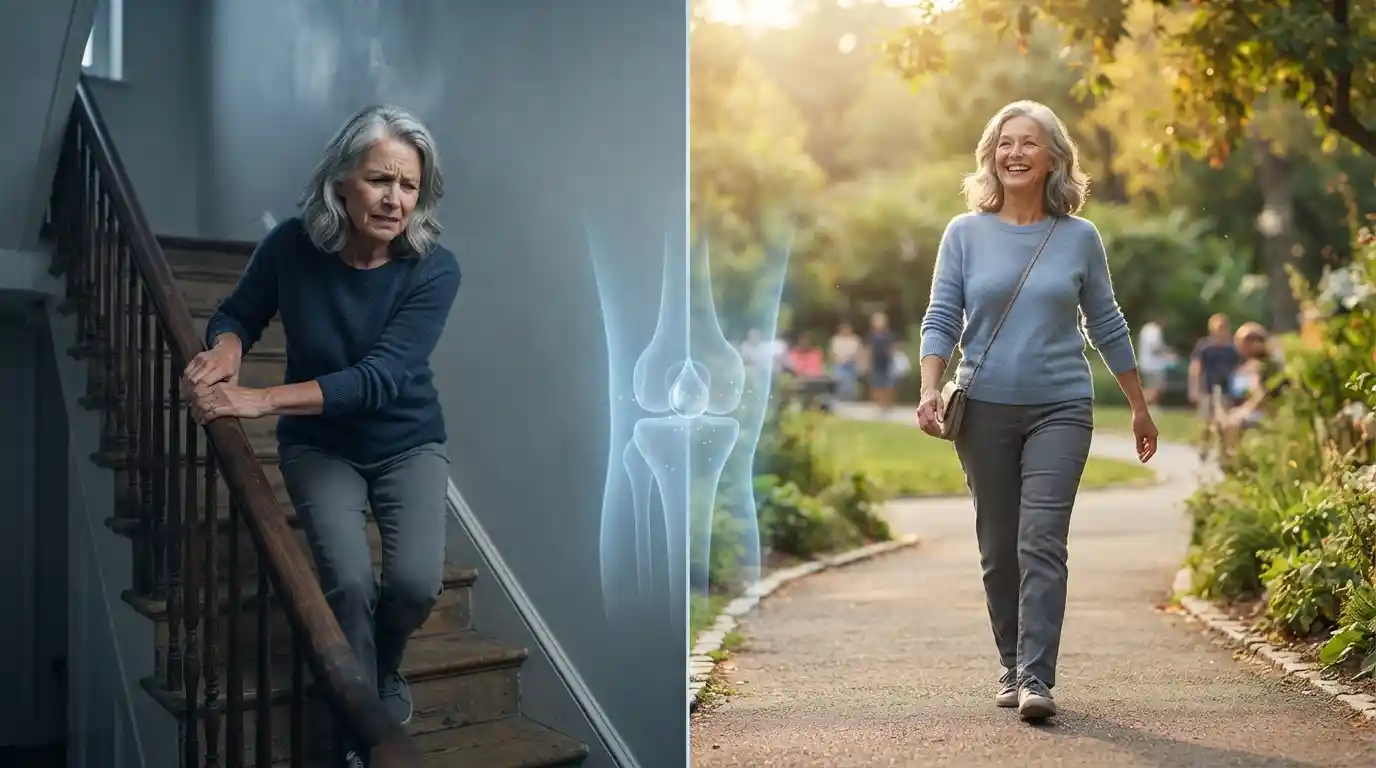
Your knee starts aching. Maybe it came on gradually. Maybe it woke you up last night. You have not had a fall, you have not twisted it, and yet the pain is there — nagging, persistent, and getting harder to ignore.
This is one of the most common presentations in a clinical setting: knee pain with no obvious injury. And it matters, because knee pain is often the first outward sign of a disease that has been developing quietly for months or even years.
This article covers the main diseases that begin with knee pain, what each one feels like, and how to tell them apart. If you are looking for specialist advice, the team at Dr SNA Clinic in London works with patients across the UK and internationally to diagnose and treat knee conditions.
Why Knee Pain Is Often a Warning Sign, Not Just a Symptom
The knee is a complex joint. It bears your body weight through thousands of steps a day, and it depends on cartilage, ligaments, tendons, fluid-filled sacs, and muscle support all working together. When any of these structures starts to break down — or when a systemic disease targets the joint — pain is usually the first thing you notice.
The type of pain, its location, and the pattern in which it develops can all point towards a specific underlying disease. That is why understanding the difference matters. Knee pain from osteoarthritis behaves very differently from knee pain caused by gout or rheumatoid arthritis — and the treatment for each is very different too.
Diseases That Commonly Start With Knee Pain
1. Osteoarthritis
Osteoarthritis is the most common cause of knee pain in adults over 50, and it is often the first disease a clinician considers. It develops when the cartilage that cushions the knee joint wears down over time, leaving bones to rub against each other.
Osteoarthritis does not usually appear overnight. It is a disease of gradual wear — and knee pain is often the first thing that brings it to attention.
What it feels like:
- A deep, dull ache inside the knee
- Stiffness in the morning or after sitting for a long time — usually easing after 20 to 30 minutes of gentle movement
- A creaking or grinding sensation when bending and straightening the knee
- Swelling that comes and goes
- Pain that gets worse with activity and improves with rest — until the condition advances further
Osteoarthritis tends to affect both knees, though one is often worse than the other. Women are disproportionately affected — particularly after the menopause, when falling oestrogen levels reduce the protection cartilage receives.
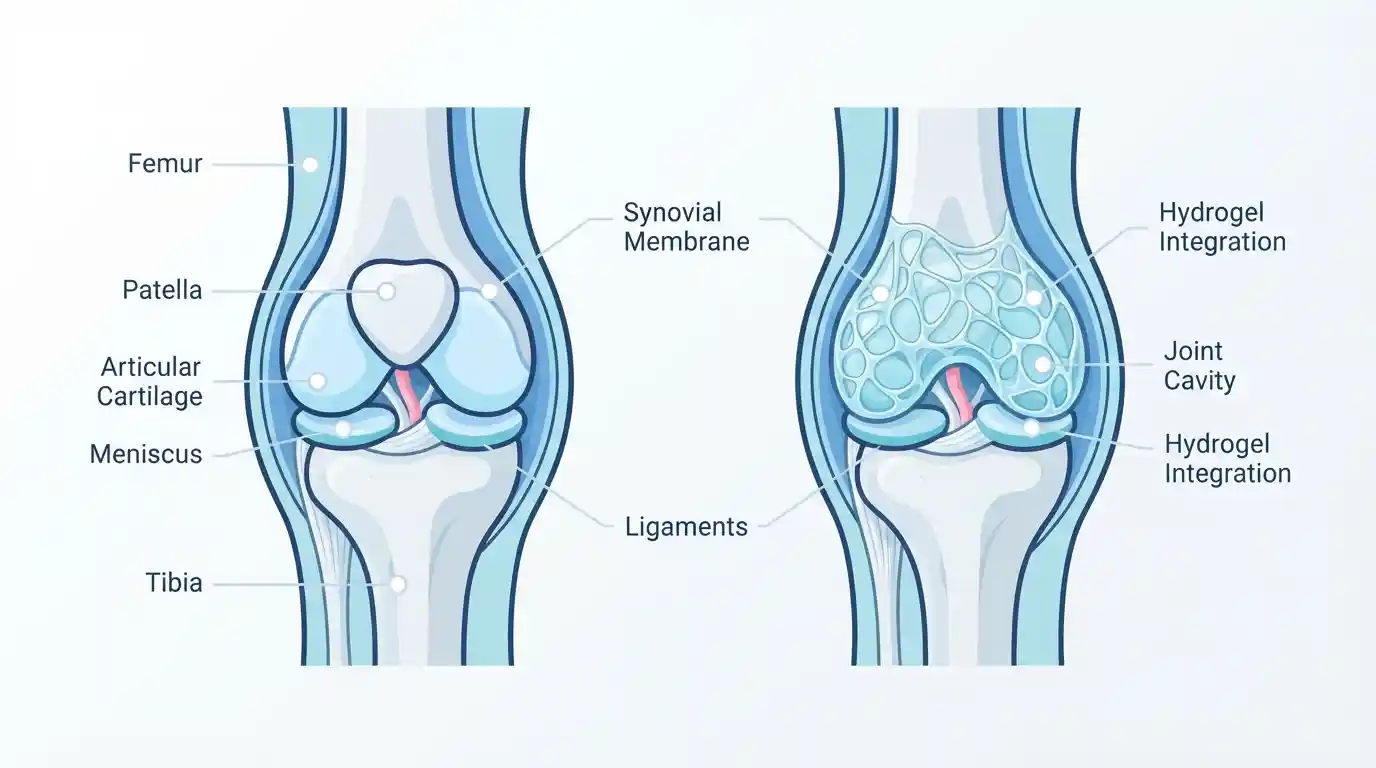
At Dr SNA Clinic, patients with mild to moderate knee osteoarthritis may be suitable candidates for the Arthrosamid injection — a non-surgical hydrogel treatment that integrates with the synovial tissue to reduce pain and improve joint function. Read more about treatment options on our blog.
2. Rheumatoid Arthritis
Rheumatoid arthritis (RA) is an autoimmune disease — meaning the immune system mistakenly attacks the lining of the joints. The knee is one of the joints most commonly affected. Unlike osteoarthritis, RA is not caused by wear and tear. It can develop at any age, and it affects women roughly three times more than men.
What it feels like:
- Symmetrical joint pain — both knees are often affected at the same time
- Significant morning stiffness lasting longer than an hour
- Warmth, swelling, and tenderness around the joint
- Fatigue and a general feeling of being unwell — because RA is a systemic disease
- Symptoms that come and go in flares, sometimes triggered by stress or infection
RA can also affect joints in the hands, wrists, feet, and shoulders. If your knee pain is accompanied by joint problems elsewhere in the body and you feel persistently tired or run-down, RA is worth investigating. Blood tests including rheumatoid factor and anti-CCP antibodies help confirm the diagnosis.
3. Gout
Gout is a type of inflammatory arthritis caused by a build-up of uric acid crystals in the joints. Most people associate gout with the big toe — but the knee is the second most commonly affected joint, particularly in men over 40.
What it feels like:
- Sudden, severe pain — often described as one of the most intense pains imaginable
- The knee becomes hot, swollen, and extremely tender to touch
- Attacks come on rapidly, often overnight
- The skin over the joint may look shiny and red
- Attacks usually resolve within 7 to 10 days but recur if uric acid levels are not managed
Gout attacks are often triggered by dehydration, alcohol, a diet high in purines (red meat, shellfish, offal), or starting certain medications. A blood test measuring serum uric acid levels and joint fluid analysis can confirm gout.
4. Pseudogout
Pseudogout is often confused with gout because it causes similar sudden, severe joint pain. The difference is that pseudogout is caused by calcium pyrophosphate crystals rather than uric acid crystals. The knee is actually the most commonly affected joint in pseudogout. It tends to affect older adults and may be linked to conditions including hyperparathyroidism, haemochromatosis, and hypomagnesaemia. Like gout, it can be confirmed through joint fluid analysis, and X-rays may show calcification within the cartilage (chondrocalcinosis).
5. Septic Arthritis
Septic arthritis is a bacterial infection of the knee joint. It is less common than the conditions above, but it is a medical emergency. The bacteria can destroy the joint within hours if left untreated.
If your knee suddenly becomes very painful, swollen, hot, and red — and you feel feverish or generally unwell — go to A&E or call 111 immediately. Do not wait for a GP appointment.
What it feels like:
- Rapid onset of severe knee pain — developing over hours rather than days
- The knee feels hot and looks visibly swollen
- Fever and chills
- Difficulty or inability to move the knee
Septic arthritis can follow a recent infection elsewhere in the body, a joint injection, or surgery. People with rheumatoid arthritis, diabetes, or a weakened immune system are at higher risk. Hospital admission, joint aspiration, and intravenous antibiotics are the standard treatment.
6. Lupus (Systemic Lupus Erythematosus)
Lupus is an autoimmune condition that can affect almost any part of the body, including the joints. Knee pain and joint swelling are among the most common early symptoms. Unlike rheumatoid arthritis, lupus-related joint disease rarely causes permanent joint damage — but it can cause significant ongoing discomfort.
Other signs that lupus may be the underlying cause include a butterfly-shaped rash across the cheeks and nose, sensitivity to sunlight, unexplained fatigue, hair loss, and kidney problems. Lupus affects women of childbearing age far more often than men.
7. Psoriatic Arthritis
Psoriatic arthritis is a form of inflammatory arthritis that develops in some people with psoriasis (a skin condition causing red, scaly patches). Around 30% of people with psoriasis develop psoriatic arthritis at some point. The knee is one of the most commonly affected joints.
What it feels like:
- Joint pain that is often asymmetrical — one knee may be affected but not the other
- Stiffness that is worse in the morning
- Swelling of entire fingers or toes (dactylitis — sometimes called ‘sausage fingers’)
- Nail changes including pitting and separation from the nail bed
Not everyone with psoriatic arthritis has obvious skin symptoms at the time they develop joint pain. In some cases the joint disease appears first. If you have a personal or family history of psoriasis and you develop unexplained knee pain, mention it to your clinician.
8. Reactive Arthritis
Reactive arthritis is joint inflammation that develops as a reaction to an infection elsewhere in the body — typically a bowel or urinary tract infection. The knee is one of the joints most commonly involved. Unlike septic arthritis, the joint itself is not infected — the immune response is what drives the inflammation.
It typically appears one to four weeks after the triggering infection. Other features can include eye inflammation (conjunctivitis), skin changes, and ulcers in the mouth or genitals. Reactive arthritis often resolves on its own within a few months but can become chronic in some cases.
9. Osgood-Schlatter Disease
Osgood-Schlatter disease primarily affects children and teenagers — particularly those going through growth spurts who are active in sport. It causes pain and swelling just below the kneecap, at the point where the patellar tendon attaches to the shinbone.
It is not actually a disease in the traditional sense, but a repetitive stress injury related to rapid bone growth. The pain typically worsens with running and jumping and improves with rest. Most cases resolve once the young person stops growing.
10. Osteosarcoma and Bone Cancer
In rare cases, knee pain — particularly in children, teenagers, and young adults — can be caused by osteosarcoma, a type of bone cancer that most often develops around the knee joint. Other bone cancers, including Ewing sarcoma, can also affect this area.
Warning signs that warrant urgent investigation include persistent bone pain in a young person, pain that is worse at night and does not settle with rest, unexplained swelling near the knee, or a palpable mass.
These cancers are rare, but early detection is critical. If you have any concern about this, see your GP without delay.
How Do You Tell These Diseases Apart?
The honest answer is: you often cannot tell them apart from symptoms alone. Many of these conditions share features — pain, swelling, stiffness. But there are some patterns that help:
- Gradual onset over months, worse in older patients, bilateral and stiff in the morning → more likely osteoarthritis
- Sudden, severe pain with redness and heat, coming in distinct attacks → more likely gout or pseudogout
- Symmetrical joint involvement, significant fatigue, morning stiffness over an hour → more likely rheumatoid arthritis
- Preceded by infection, fever, rapid deterioration → septic arthritis (seek emergency care)
- Associated skin conditions, asymmetrical → consider psoriatic arthritis or lupus
- Young, active patient with pain below kneecap → consider Osgood-Schlatter disease
A proper clinical diagnosis involves a history, a physical examination, blood tests, and often imaging — X-ray, ultrasound, or MRI. No article should replace that.
When Should You See a Specialist?
You should see your GP as a starting point if:
- Your knee pain has lasted longer than a few weeks and is not improving
- It is affecting your sleep, your work, or your daily activities
- You notice swelling, redness, or warmth around the joint
- You have morning stiffness lasting more than 30 minutes
- You have joint symptoms elsewhere in the body
See your GP urgently if:
- Your knee is very swollen, hot, and painful with fever — septic arthritis requires emergency treatment
- You cannot bear weight on the knee
- You have a persistent unexplained lump or bone pain, particularly if you are under 40
If you have already seen your GP and are looking for specialist private assessment in London, Mr S N Abbas at Dr SNA Clinic provides full clinical evaluation for patients with knee pain. His background in NHS Trauma and Orthopaedics at Cambridge and Oxford means he assesses the knee the way a surgeon would — identifying not just what to treat, but whether treatment is genuinely warranted.
What About Knee Pain From Injury vs Disease?
It is worth being clear about this distinction. Diseases tend to cause knee pain that:
- Develops gradually without a specific incident
- Is often worse after rest and in the morning
- Affects both knees (though not always equally)
- Comes with other systemic symptoms — fatigue, rashes, fever, or joint problems elsewhere
Injury-related knee pain tends to:
- Follow a specific event — a twist, a fall, a collision
- Come on suddenly and be immediately limiting
- Be localised to a specific part of the knee (inner, outer, below the kneecap)
- Show up clearly on imaging as a tear, fracture, or ligament injury
That said, the distinction is not always clean. Someone with underlying osteoarthritis may injure their knee and find that what seemed like a simple sprain does not heal as expected. The joint disease complicates the picture.
What Is the Fastest Way to Get Knee Pain Assessed Properly?
If you want an NHS assessment, start with your GP. They can refer you for X-rays, blood tests, and if needed, an orthopaedic or rheumatology opinion. Waiting times vary considerably depending on where you are in the UK.
If you want a private assessment, you can self-refer directly to a private knee specialist without a GP referral. This typically means a shorter wait and more time to discuss your symptoms and imaging in detail. At Dr SNA Clinic, the initial consultation with Mr Abbas costs £100 — fully redeemable against treatment if you proceed. You can read more about the clinic’s approach to knee pain assessment and treatment options on the Dr SNA Clinic blog.
Quick Summary: Diseases That Start With Knee Pain
- Most common: Osteoarthritis
- Autoimmune, symmetrical: Rheumatoid arthritis
- Uric acid crystals, sudden severe attacks: Gout
- Calcium crystals, most often in the knee: Pseudogout
- Medical emergency — infection of the joint: Septic arthritis
- Systemic autoimmune condition: Lupus
- Linked to psoriasis: Psoriatic arthritis
- Follows bowel or urinary infection: Reactive arthritis
- Affects teenagers during growth spurts: Osgood-Schlatter disease
- Rare — seek urgent advice if you suspect it: Osteosarcoma
The Bottom Line
Knee pain that appears without injury is not something to simply manage with paracetamol and hope it settles. It can be the first sign of a systemic disease that needs proper diagnosis and treatment.
The good news is that most of these conditions are very treatable — particularly when caught early. Whether the cause turns out to be osteoarthritis, gout, an inflammatory condition, or something else entirely, the right assessment gives you the information you need to make good decisions about your health.
If you have been experiencing knee pain that is affecting your quality of life, it is worth getting it properly looked at. You can find more information, clinical articles, and patient guides at the Dr SNA Clinic blog.
This article is for informational purposes only and does not constitute medical advice. If you are concerned about your knee pain, please consult a qualified healthcare professional.