
✅ Medically reviewed | Updated July 2026
Nobody plans for a curve to show up where it never used to be. One day, everything works the way it always has — and then it doesn’t, and a man is left staring at something he’s too embarrassed to Google properly, let alone mention to a partner or a GP. Ignoring it feels like the easier option, right up until it isn’t. This condition rarely resolves on its own, and the gap between “I’ll deal with it later” and “I wish I’d dealt with it sooner” tends to close faster than most men expect. This article walks through exactly what happens when this scarring condition goes unaddressed, what the realistic timeline looks like, and what options exist if you’re ready to do something about it.
What Is Peyronie’s Disease?
Peyronie’s disease develops when fibrous scar tissue, called plaque, forms beneath the skin of the penis. This plaque pulls the surrounding tissue tight during an erection, producing a visible bend, curve, or narrowing. The scarring itself isn’t dangerous, but the effects it has on a man’s confidence and sex life often are significant.
Doctors don’t fully understand why the plaque forms in every case, though minor trauma to the penis during sex or physical activity appears to trigger it in many men. Some men notice a lump they can feel through the skin. Others only notice the curve once an erection makes it obvious. Either way, the condition tends to announce itself gradually rather than overnight.
Two Phases: Active and Stable
Clinicians generally describe this condition in two stages, and understanding the difference matters enormously for anyone deciding whether to wait it out.
The Active Phase
During the active phase, which typically lasts somewhere between six and eighteen months, the curvature and any associated pain tend to change. The plaque may still be forming, so the degree of bend can worsen during this window. Pain, when present, usually shows up here too, often during erection rather than at rest.
The Stable Phase
Once the plaque stops developing, the condition moves into the stable phase. Pain typically settles down on its own around this point, but the curvature that remains is usually the curvature a man is left with long-term. This is the phase where “wait and see” stops paying off, because there’s often nothing left to wait for.
What Happens If Peyronie’s Disease Is Left Untreated
Skipping treatment doesn’t mean nothing happens — it means the condition is left to run its own course, and that course isn’t always kind.
The Curve Can Become Permanent
Left alone, the bend that formed during the active phase generally locks in once the disease stabilises. A small number of very mild cases do improve without any intervention, but this isn’t the typical pattern, and a man can’t know in advance which category he’ll fall into.
Intimacy Can Become Physically Difficult
As curvature increases, penetration can become uncomfortable or, in more pronounced cases, mechanically difficult for either partner. Some men also experience shortening of the shaft as the plaque hardens and pulls tissue inward.
Erectile Function Can Decline Further
The scarring can interfere with normal blood flow through the penile tissue. Over time, this sometimes contributes to erectile dysfunction that exists alongside the curvature, compounding the original problem rather than staying separate from it.
The Emotional Toll Builds Quietly
Anxiety, avoidance of intimacy, and a dented sense of self-confidence are extremely common companions to this condition, and they’re just as worth treating as the physical curve. Relationship strain often follows when a man withdraws rather than talks about what’s happening, which is precisely the opposite of what tends to help.
Watching and Waiting Rarely Pays Off
It’s tempting to assume things will settle down naturally. Sometimes pain does fade on its own. The structural bend, however, is a different story — once tissue has scarred and stabilised, the body doesn’t typically undo that work by itself.
Why Seeing Someone Sooner Changes the Picture
Timing genuinely matters with this condition. Treatments aimed at softening plaque and improving tissue quality tend to have more to work with during the active phase, before scarring fully sets. Waiting until the stable phase doesn’t make treatment impossible, but it narrows what’s realistically achievable.
A urologist or regenerative medicine specialist can assess which phase a man is in, examine the degree of curvature, and talk through what’s genuinely appropriate for that individual case. There’s a real difference between guessing at home and getting an honest clinical opinion.
Treatment Options Worth Knowing About
Nobody is stuck choosing between “do nothing” and “major surgery.” The middle ground is wider than most men realise.
Watchful Monitoring
For very mild curvature with no pain or functional impact, some clinicians recommend simply monitoring the condition through the active phase before deciding on next steps.
Oral and Injectable Medications
Certain medications, including injectable options that target the plaque directly, are used to help break down fibrous tissue and improve flexibility over time.
Regenerative Approaches Using PRP
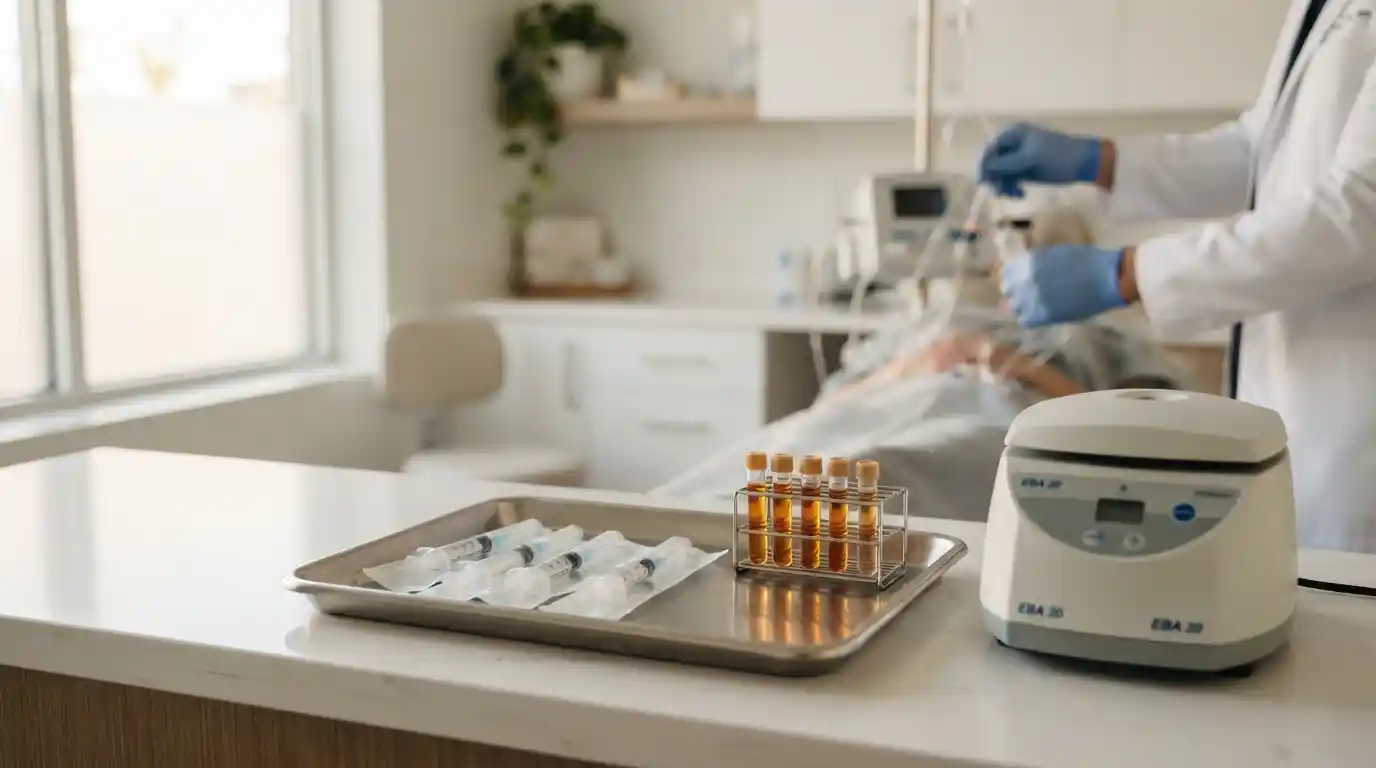
Platelet-rich plasma treatment, more widely known as the P Shot or Priapus Shot, uses a concentrate drawn from a man’s own blood. The anti-inflammatory and tissue-remodelling properties of PRP may help reduce plaque size and soften affected tissue over time, and some patients combine it with a traction protocol for added benefit where curvature is significant. This isn’t presented as a guaranteed fix, and outcomes vary considerably between individuals — which is exactly why an honest consultation matters before anyone commits to anything.
Surgical Correction
For more severe or long-standing curvature that significantly affects function, surgical straightening remains an option, generally reserved for cases where conservative approaches haven’t delivered the outcome a man needs.
What a P-Shot Consultation and Appointment Actually Involves
If PRP is something you’re considering, it helps to know exactly what a real appointment looks like rather than a vague outline. At Dr SNA Clinic, the process runs like this:
Preparation (around 10 minutes): A topical numbing cream is applied to the treatment area. A penile nerve block is available on request for anyone with a lower pain threshold.
Blood collection (around 5 minutes): A small blood sample is drawn from the arm, similar to a routine blood test.
PRP processing (around 15 minutes): The sample goes through a dual-spin centrifuge protocol, which concentrates platelets to a higher level than standard single-spin methods.
Injection (around 10 minutes): The concentrated plasma is injected using ultra-fine needles, typically at four to five sites depending on individual assessment.
The full appointment runs 30 to 45 minutes, with no downtime afterward — most men return to normal activities, including driving and desk work, the same day. Sexual activity is generally paused for four to five days to let the treated area settle. Two follow-up consultations are built into the process, one at six weeks and another at twelve weeks, so progress gets reviewed rather than left to guesswork.
Pricing and Practical Details
Standard P Shot session: From £1,250, using the dual-spin PRP protocol described above.
Enhanced P-Shot combined with shockwave therapy: From £1,350, which pairs PRP with low-intensity shockwave to support blood vessel formation further.
Every package includes the consultation, the PRP processing itself, numbing or nerve block anesthesia, the injections performed personally by the treating physician, and both follow-up appointments. 0% finance is available for anyone who’d rather spread the cost over several months.
Clinic address: 48 Wimpole Street, Marylebone, London W1G 8SF
Clinic hours: 10:00–18:00, UK
Phone: +44 7955 836986
Full pricing, package details, and treatment specifics are set out on the P-Shot treatment page, which is worth a read before booking anything.
Who Tends to Respond Well — and Who Doesn’t
Not every man with this Peyronie’s disease condition is automatically a good fit for PRP-based treatment. Men in the active phase, with mild-to-moderate curvature and no active infections or bleeding disorders, tend to be reasonable candidates. Men currently on anticoagulant therapy, undergoing pelvic cancer treatment, or dealing with an active infection generally aren’t suitable until those issues are resolved. This is precisely why a proper consultation, not a guess based on a website, decides suitability.
A Quick Video Worth Watching
For anyone who prefers to see the process explained rather than read about it, the clinic’s YouTube channel includes doctor-led explanations of the P Shot procedure and patient experiences, which can be a genuinely useful next step before booking a consultation.
Frequently Asked Questions
Does Peyronie’s disease get worse if untreated?
It can, particularly during the active phase. Once the condition stabilises, the curvature that remains often becomes permanent, though the rate and degree of change varies from man to man.
Can this condition go away on its own?
Occasionally, very mild cases improve without treatment, but this isn’t the typical outcome, and there’s no reliable way to predict who falls into that smaller group.
Is treatment painful?
Discomfort varies depending on the approach. For PRP-based treatment, numbing cream or a nerve block is used, and most patients describe the sensation as mild pressure rather than significant pain.
How soon should someone see a specialist?
Sooner tends to be better, particularly if still in the active phase, since several treatment approaches have more to work with before scarring fully stabilises.
Is the P-Shot a cure for Peyronie’s disease?
No single treatment guarantees a fixed outcome, and PRP is no exception — it’s one option among several, with results that vary between individuals and are best discussed honestly at consultation.
Final Thought
Leaving this Peyronie’s disease condition unaddressed rarely makes it disappear — more often, it simply narrows the options available later. The active phase is a genuine window, not an inconvenience to be waited out, and getting an honest assessment early tends to leave far more doors open than waiting does. Whether that assessment leads to monitoring, medication, a regenerative approach, or something else entirely, the first useful step is usually just talking to someone qualified about it — visit the Dr SNA Clinic to find out where things genuinely stand.
Related Reading From Dr SNA Clinic
- P-Shot London — Full Treatment Overview and Pricing
- Is the P-Shot Worth Getting? An Honest Answer
- P-Shot for Erectile Dysfunction: What the Evidence Says
- P-Shot for Peyronie’s Disease: What Early Research Shows
- P-Shot for Lichen Sclerosus: What Early Research Shows
- Can the P-Shot Help With Low Libido?
- Erectile Dysfunction Treatment UK: Every Option Explained Honestly
- P-Shot Side Effects: What Are the Risks and How Common Are They?
Dr Syed Nadeem Abbas, MBBS, MRCSEd, MSc Aesthetic Plastic Surgery (Distinction) Medical Director, Dr SNA Clinic 48 Wimpole Street, Marylebone, London W1G 8SF GMC Registered | CQC Regulated | Monday to Saturday 10:00–18:00 +44 7955 836986 | info@drsnaclinic.com