Peyronie’s disease is one of the most overlooked conditions in men’s health. This article answers those questions honestly. It explains how P shot treatment works for Peyronie’s disease, what the current evidence shows, what results look like in practice, and where to find certified treatment in the UK. It causes fibrous scar tissue to build up inside the penis. That scar tissue creates an abnormal curve during erection. For some men, the curve is mild. For others, it causes real pain and makes intimacy feel impossible.
Many men spend months searching for answers. They try medication. Results disappoint. They read conflicting information online and feel too embarrassed to raise the issue with their GP. Eventually, searches like “P shot UK,” “penile injection growth,” or “Priapus shot price” start appearing in their browser history.
What Peyronie’s Disease Does to the Body
Peyronie’s disease causes abnormal scar tissue — called plaque — to form inside the penis. This plaque sits in the fibrous sheath surrounding the erectile chambers. It is rigid and does not stretch normally during erection. As a result, the penis curves toward the scarred side, causing discomfort and, for many men, significant emotional distress.
Common treatments include oral medication, collagenase injections into the plaque, and surgery. Each has a place. However, all carry drawbacks — whether limited results, side effects, high cost, or long recovery time. This is why more men in the UK are now exploring the priapus shot as a natural, non-surgical option.
How P Shot Treatment Works for Peyronie’s Disease
P shot treatment delivers concentrated platelet-rich plasma directly into the penile tissue. A clinician draws a small blood sample from the patient’s arm. They spin it in a medical centrifuge to separate out the platelets and growth factors. Then they inject the concentrated plasma using very fine needles into targeted areas.
For Peyronie’s disease, two things matter most. First, PRP has strong anti-inflammatory properties. These may slow down or stop new plaque from forming — especially during the active phase of the condition. Second, the growth factors in PRP help remodel collagen. Over time, this may soften existing scar tissue and reduce the curve.
Additionally, some patients combine the p-shot with a penile traction device. This combination may offer extra benefit for men with significant curvature. A doctor assesses each patient individually before making this recommendation.
What the Evidence Currently Shows
The evidence for PRP in Peyronie’s disease is growing, but it is not yet complete. Any clinic that claims certainty deserves scrutiny. However, the early clinical results are encouraging.
A 2021 study published in the Journal of Sexual Medicine (Poulios et al.) tested PRP injections against a placebo. The trial was randomised, double-blind, and placebo-controlled. It found a clinically meaningful improvement in erectile function scores at six months. Although the trial focused mainly on erectile dysfunction, the underlying mechanism — tissue repair and improved blood flow through growth factors — applies directly to Peyronie’s disease.
Furthermore, PRP has decades of proven use in orthopaedics, wound care, and skin treatments. Its use in male intimate health follows the same science. Specific Peyronie’s research is still developing, but the foundation is solid. Therefore, p shot treatment represents a biologically sound option — particularly in the active phase of the condition — as long as a qualified doctor sets honest expectations.
P Shot Before and After: A Realistic Timeline
The P shot before and after process happens gradually. PRP triggers a biological healing process, so results build over several weeks rather than appearing overnight. Here is what patients typically experience:
Weeks 1 to 2 — Settling phase. The treated area settles. Some men notice slightly increased sensitivity. There are usually no visible signs that a procedure took place. Sexual activity can resume after four to five days.
Week 4 — Early changes. Many men begin noticing improvements around this point. Sensitivity often increases noticeably. Some report stronger morning erections as new blood vessels start to form.
Weeks 8 to 12 — Main results. This is when the most significant P-shot before and after changes typically appear. Men with Peronei’s disease may notice less curvature, reduced discomfort during erection, or a softer feel where the plaque once was.
12 months and beyond. Results can last for twelve months or longer. Many men choose an annual maintenance session to keep their progress going.
Results vary from person to person. The size of the curve, how long the condition has been present, its current phase, and overall health all affect what the treatment can achieve.
Clinic Details: Dr SNA Clinic, London
Men across the UK searching for P shot London or Priapus shot London from a regulated, doctor-led clinic will find Dr SNA Clinic among a small number of providers with formally certified practitioners and CQC regulation.
Address: 48 Wimpole Street, Marylebone, London W1G 8SF
Primary Phone: +44 7955 836986
Office Line: +44 20 3846 7111
Email: info@drsnaclinic.com
Opening Hours: 10:00 – 18:00 UK
Book Online: drsnaclinic.com/booking
The clinic sits in central London and sees patients from across the UK and internationally. Privacy and discretion are a priority throughout every visit.
Priapus Shot Price and What Each Package Covers
Men looking into male enlargement injections cost UK or the Priapus shot price often want to understand what their money actually covers. At Dr SNA Clinic, all prices are listed openly with no hidden fees.
Standard P-Shot — from £1,250 This suits most patients with Peyronie’s disease, erectile dysfunction, or reduced sensitivity. The price covers the full session using dual-spin PRP processing.
Enhanced P-Shot with Shockwave Therapy — £1,350 (reduced from £1,750) This combines the pshot with low-intensity shockwave therapy in the same visit. The sound waves boost cellular absorption and support blood vessel growth. Doctors recommend this option where poor blood flow plays a key role.
Every package includes:
- A full consultation with Dr Abbas
- Dual-spin PRP processing for a higher platelet concentration
- Topical numbing cream or a nerve block for comfort
- All injections carried out personally by Dr Abbas
- A follow-up consultation at six weeks
- A follow-up consultation at twelve weeks
Zero percent finance is available for patients who prefer to spread the cost. There is no obligation to apply.
Who Performs the Treatment
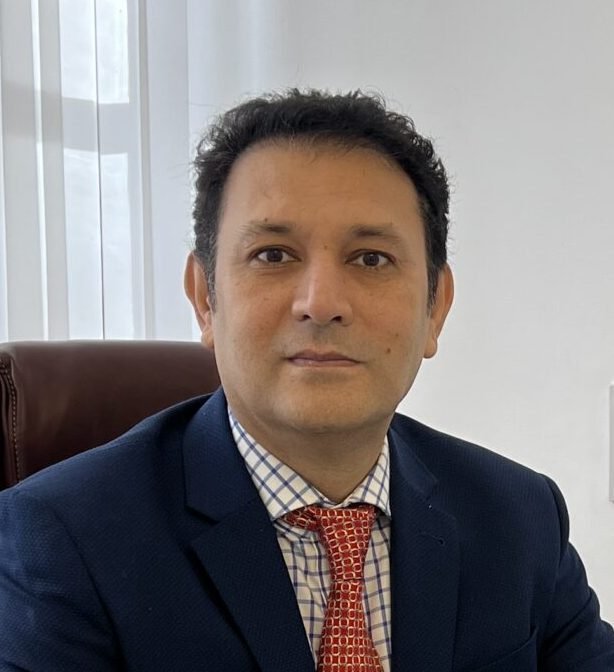
Dr Syed Nadeem Abbas, MBBS, MRCSEd, personally carries out every P-shot at Dr SNA Clinic. He does not pass the procedure to nurses or junior staff. Each patient receives continuity of care from the same doctor throughout.
Dr Abbas spent over six years working in Trauma and Orthopaedics at NHS hospitals including Cambridge and Oxford. He completed a postgraduate Masters in Aesthetic Plastic Surgery at Queen Mary University of London, graduating with Distinction. Moreover, he holds specialist priapus shot certification from the American Cellular Medical Association — one of only a small number of UK doctors to do so.
His verified patient reviews carry a 4.9-star average from more than 36 patients. Visit drsnaclinic.com to read his full profile and patient stories.
What Happens at Your Appointment
The full appointment takes between 30 and 45 minutes. No complex preparation is needed beforehand, and patients can drive themselves home afterwards.
Step 1 — Comfort preparation (10 minutes). A numbing cream is applied to the treatment area on arrival. Patients who prefer a nerve block can request this when booking or on the day.
Step 2 — Blood draw (5 minutes). A small blood sample is taken from the arm. The volume is similar to a routine blood test.
Step 3 — PRP processing (15 minutes). Dr Abbas places the blood into a centrifuge. The dual-spin method concentrates the platelets more effectively than standard single-spin processing. Most patients simply relax during this stage.
Step 4 — PRP preparation (5 minutes). Dr Abbas draws the concentrated plasma into syringes and maps out the injection points based on each patient’s individual anatomy.
Step 5 — Targeted injections (10 minutes). The plasma is injected using very fine needles, typically across four to five points. Most men describe this as mild pressure rather than pain.
Step 6 — Aftercare review. Dr Abbas goes through aftercare instructions before the patient leaves. Where appropriate, he provides a medical-grade vacuum device for home use during the early recovery phase.
Patients can return to work, drive, and carry on with daily life immediately. Two follow-up appointments at six and twelve weeks are included in every package.
Is This Treatment Suitable for Every Peyronie’s Patient?
Honestly, P shot treatment works best for specific situations. A good doctor will tell you clearly if the treatment is unlikely to help in your case.
Men most likely to benefit include those with:
- Active-phase Peyronie’s disease, before the curve has fully set
- Mild to moderate curvature with an inflammatory component
- Good general health and no active infection
- No bleeding disorders or clotting problems
- No blood-thinning medication (unless safely paused by their doctor)
The treatment is not suitable for men who are:
- Currently having chemotherapy or radiotherapy in the pelvic area
- Dealing with an active genital or skin infection
- Taking anticoagulant medication that cannot be safely paused
- Known to be allergic to local anaesthetic
A one-to-one consultation with Dr Abbas is the most reliable way to find out if the treatment is right for you. There is no pressure to proceed at that stage.
Conclusion
The evidence for P shot treatment in Peyronie’s disease is still developing. However, the science behind it is sound, the early clinical results are positive, and the safety record is strong. The treatment uses only the patient’s own blood-derived plasma. Therefore, there are no synthetic drugs, no implants, and no general anaesthetic.
For men in the UK seeking a non-surgical, drug-free approach to Peyronie’s disease, the priapus shot is one of the most credible options available today. Dr SNA Clinic delivers this treatment under the personal care of Dr Syed Nadeem Abbas — a formally certified specialist — inside a CQC-regulated clinic at 48 Wimpole Street, Marylebone. Prices start from £1,250, with zero percent finance available.
If you have been living with Peyronie’s disease and wondering whether anything can genuinely help — is there any better first step than an honest, no-obligation conversation with a specialist who will tell you directly whether you are a suitable candidate?
Read More: P Shot London
P Shot Side Effects: What Are the Risks and How Common Are They?
P Shot Treatment: What Is PRP and Why Is It Used in the P Shot?