
Medically reviewed by Mr Syed Nadeem Abbas, MBBS, MRCSEd, MSc (Distinction) | Updated June 2026
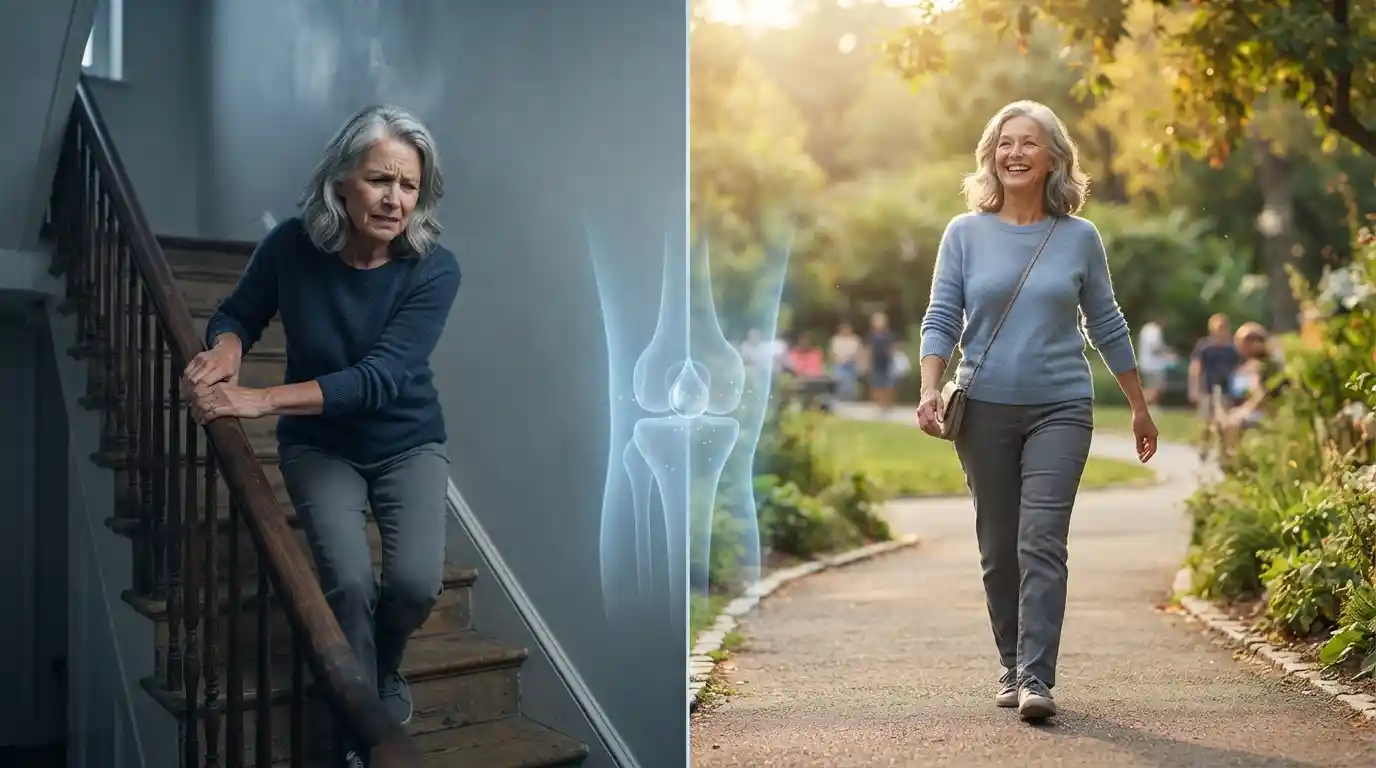
Knee pain when bending is one of the most common complaints that brings people to clinic. It stops you sitting down comfortably, makes getting up from a chair feel like an ordeal, and turns a simple flight of stairs into something you think twice about.
The good news is that most causes of knee pain when bending are treatable — but the right treatment depends entirely on what is driving the pain. This guide explains the common causes, what the location of your pain tells you, and what your options are, from self-care at home to specialist treatment.
Why Does the Knee Hurt Specifically When Bending?
The knee joint is under considerable load during bending. Research shows that for roughly every 500g of body weight, approximately 3kg of pressure is applied to the knee when it bears weight. When you squat, climb stairs, or bend to pick something up, that force increases further.
The bending movement stresses multiple structures at once — cartilage, tendons, ligaments, bursae, and the joint lining itself. Pain during bending tells you that at least one of those structures is under abnormal stress or has become damaged or inflamed.
The specific location of your pain — front, back, inside, or outside of the knee — helps narrow down the likely cause considerably.
What Causes Knee Pain When Bending? The Main Culprits
1. Knee Osteoarthritis
This is the most common cause of knee pain when bending in people over 50. The cartilage that cushions the joint gradually wears down over years. As it thins, bone begins to rub against bone, causing pain, stiffness, and swelling.
The pain is typically worse after rest — particularly in the morning or after sitting for a long time — and may ease slightly after a few minutes of gentle movement, only to worsen again with prolonged activity. Bending, squatting, and stairs tend to be the most uncomfortable movements.
A creaking or grinding sensation (crepitus) when you bend the knee is another common sign. You may also notice the knee swelling or feeling stiff at the end of the day.
Osteoarthritis is progressive. It does not reverse, but it can be managed effectively with the right treatment approach. If you want to understand your full range of options, our guide on how to stop knee pain covers every treatment option from self-management to specialist intervention.
2. Patellofemoral Pain Syndrome (Runner’s Knee)
This condition causes a dull, aching pain at the front of the knee — around or behind the kneecap. It is especially common in younger, active people and in women, though it can affect anyone.
The pain typically worsens when bending the knee under load — squatting, kneeling, running downhill, or sitting for extended periods with bent knees (sometimes called “theatre sign”). The kneecap is not tracking correctly in its groove, causing repeated irritation to the cartilage underneath it.
Physiotherapy and targeted quadriceps strengthening exercises are usually the first line of treatment.
3. Meniscal Tear
The menisci are two C-shaped pieces of cartilage that sit inside the knee joint, acting as shock absorbers between the thighbone and shinbone. A tear — whether from a sudden twisting injury or gradual wear — causes pain, swelling, and often a catching or locking sensation when bending.
Sharp pain when bending or straightening the knee, particularly if accompanied by a feeling that the knee might give way, is a classic sign of a meniscal tear. Older adults can develop degenerative meniscal tears without any obvious injury event.
4. Bursitis
Bursae are small, fluid-filled sacs that cushion the structures inside the knee. Inflammation of these sacs — often caused by repetitive kneeling or direct impact — causes swelling, warmth, and pain, particularly when bending the knee.
Prepatellar bursitis (swelling over the kneecap) is common in people who kneel regularly for work. Pes anserine bursitis causes pain on the inner side of the knee, just below the joint.
5. Baker’s Cyst
A Baker’s cyst is a build-up of synovial fluid at the back of the knee. It often develops as a consequence of another knee problem — osteoarthritis or a meniscal tear — that causes excess joint fluid to accumulate.
Pain or tightness behind the knee when bending is the characteristic symptom. The cyst itself is sometimes visible as a soft bulge in the crease at the back of the knee. Treating the underlying cause usually resolves the cyst.
6. Patellar Tendonitis (Jumper’s Knee)
The patellar tendon connects the kneecap to the shinbone. Repeated jumping, running, or sudden increases in activity can inflame this tendon, causing a burning pain just below the kneecap — particularly noticeable when bending the knee under load.
7. Iliotibial Band Syndrome
The iliotibial (IT) band runs along the outer side of the thigh and crosses the knee. When it becomes tight or irritated, it causes a burning pain on the outer side of the knee that worsens with repeated bending movements such as running or cycling.
8. Ligament Injury
Sprains or tears to the ligaments inside or around the knee — most commonly the ACL, PCL, or MCL — cause sharp, often severe pain that typically appears immediately after injury, along with swelling and instability.
Where Exactly Is Your Knee Pain? What the Location Tells You
The position of your pain is a useful clue.
Pain at the front of the knee when bending most commonly points to patellofemoral pain syndrome, patellar tendonitis, or early-stage osteoarthritis affecting the kneecap area.
Pain at the back of the knee when bending is most likely caused by a Baker’s cyst, hamstring tendonitis, or a posterior meniscal tear.
Pain on the inside (medial) of the knee suggests medial osteoarthritis, an MCL sprain, or pes anserine bursitis.
Pain on the outside (lateral) of the knee points to IT band syndrome, a lateral meniscal tear, or lateral compartment osteoarthritis.
Sharp pain anywhere in the knee when bending may indicate a torn ligament or meniscus, or a fracture — particularly if it came on suddenly after an injury.
None of these symptoms confirm a diagnosis on their own. A proper clinical assessment — including a physical examination and, where appropriate, imaging — is always the essential first step before any treatment is agreed.
When Is Knee Pain When Bending Serious?
Most knee pain is not a medical emergency. But there are situations where you should seek prompt attention.
Get same-day medical advice if:
- Your knee is badly swollen and you cannot bear weight on it
- Your knee has visibly changed shape
- You have severe pain following a fall or impact
- Your knee is hot, red, and swollen alongside a high temperature — this may indicate infection or septic arthritis
See your GP if:
- The pain has not improved within two to three weeks of self-management
- You have ongoing stiffness or swelling that comes and goes
- The knee catches, locks, or gives way regularly
- The pain is consistently worsening over time
What Can You Do About Knee Pain When Bending?
Self-Management First
For mild to moderate knee pain without an obvious structural cause, the following steps are a reasonable starting point:
- Rest and reduce aggravating activity — temporarily avoid high-impact exercise such as running or heavy squatting
- Ice — apply a bag of frozen peas wrapped in a cloth to the knee for 15 to 20 minutes, two to three times a day, to reduce acute swelling
- Painkillers — paracetamol is the first-line recommendation from NICE for knee pain. Topical anti-inflammatory gels such as diclofenac can also help, applied directly over the painful area
- Gentle low-impact exercise — swimming and cycling maintain strength and mobility without overloading the joint
- Weight management — even modest weight loss meaningfully reduces the load on the knee with every step
For more on what actually works for knee pain day to day, read our detailed guide: What Is the Best Way to Relieve Knee Pain?
Physiotherapy
Targeted physiotherapy is one of the most effective treatments for knee pain when bending, particularly for patellofemoral pain syndrome, tendonitis, and early-stage osteoarthritis. A physiotherapist will design exercises to strengthen the muscles around the knee — particularly the quadriceps and hip abductors — which reduces the load passing through the joint itself.
Consistency matters here. Physiotherapy exercises done sporadically rarely deliver meaningful improvement.
Steroid Injections
A corticosteroid injection into the knee can reduce inflammation and pain quickly — typically within a few days. The effect usually lasts between four and twelve weeks. It is a useful tool for acute flare-ups but is not a long-term solution. Repeated steroid use can damage cartilage over time, which is an important consideration in any joint that already has osteoarthritis.
Hyaluronic Acid Injections
These were once commonly used to supplement the knee’s natural joint fluid. NICE no longer recommends hyaluronic acid injections for knee osteoarthritis, and they are not offered at Dr SNA Clinic.
Arthrosamid Injection — For Suitable Patients With Knee Osteoarthritis
For patients whose knee pain when bending persists despite physiotherapy, pain relief, and lifestyle changes — and whose pain is driven by mild to moderate osteoarthritis — the Arthrosamid injection offers a different kind of option.
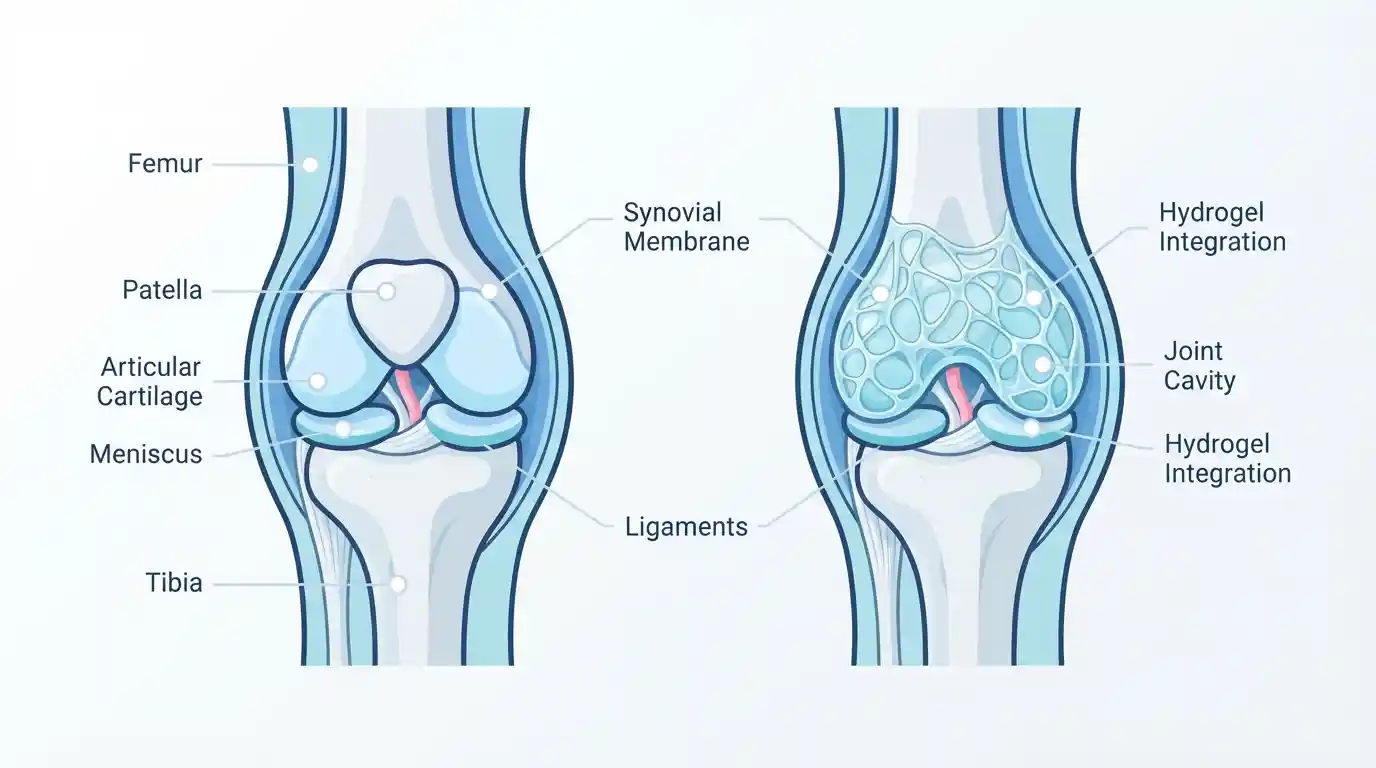
Arthrosamid is a non-biodegradable hydrogel injection that integrates with the synovial tissue inside the knee joint. It is not a steroid. It does not break down in the body. Clinical studies report sustained improvements in pain and function for up to five years in suitable patients from a single injection.
At Dr SNA Clinic, every Arthrosamid injection is performed by Mr Syed Nadeem Abbas personally — a consultant with six years of NHS Trauma and Orthopaedics training at Cambridge and Oxford. The procedure uses ultrasound guidance for precise placement and the dual-spin centrifuge protocol where PRP is also required. Prophylactic antibiotics are given as standard, in line with official Arthrosamid guidelines.
Arthrosamid is not suitable for everyone. It works best for patients with mild to moderate knee osteoarthritis who have not responded to conservative treatment. It is generally not appropriate for bone-on-bone arthritis, active knee infection, or those with an allergy to polyacrylamide.
If you are considering whether Arthrosamid could be right for you, our detailed breakdown of what the Arthrosamid injection involves, how much it costs, and what results patients can realistically expect is the best place to start. You can also read about how it compares to other approaches in Pain in the Knee: Causes, Treatments, and When to Seek Help.
Knee Replacement Surgery
For advanced osteoarthritis where conservative and injectable treatments are no longer effective, knee replacement surgery may be the appropriate next step. This involves removing the damaged surfaces of the joint and replacing them with a prosthesis. Recovery takes several months.
Many patients explore treatments like Arthrosamid specifically to postpone or avoid reaching that point. UK provider data suggests that a meaningful proportion of suitable patients manage their symptoms well enough following Arthrosamid to delay or avoid surgery.
Knee Pain When Bending and Straightening — Is That Different?
Pain on both bending and straightening — particularly if it is worst first thing in the morning or after sitting — is a classic presentation of knee osteoarthritis. The joint is stiff from disuse, and movement in either direction causes irritation.
Morning stiffness that improves after ten to fifteen minutes of gentle movement, followed by pain returning with prolonged activity, is one of the most consistent patterns of knee osteoarthritis. If this sounds familiar, it is worth getting a proper assessment.
Difficulty fully extending the knee (straightening it completely) can also indicate a meniscal tear, joint effusion (fluid on the knee), or scarring from previous injury.
What Helps Knee Pain When Bending — A Practical Summary
| Situation | What Usually Helps |
| Mild, recent onset with no injury | Rest, ice, paracetamol, gentle movement |
| Pain after exercise or overuse | RICE method, physiotherapy, activity modification |
| Osteoarthritis — early to moderate | Physiotherapy, weight management, Arthrosamid injection |
| Acute inflammation or flare-up | Steroid injection, anti-inflammatory medication |
| Osteoarthritis — advanced or bone-on-bone | Specialist assessment, possible knee replacement |
| Suspected ligament or meniscal tear | Urgent GP or specialist referral, imaging |
When to See a Specialist
If your knee pain when bending has persisted for more than a few weeks despite self-management, or if it is interfering with your sleep, work, or daily activities, it is time to see someone with the right clinical background to assess it properly.
Knee pain that limits what you can do is not something to simply live with. An accurate diagnosis changes everything — because the right treatment depends entirely on knowing what is actually driving the pain.
If you are in London or are willing to travel, Mr Syed Nadeem Abbas at Dr SNA Clinic offers private knee consultations at 48 Wimpole Street, Marylebone. The initial consultation costs £100, fully redeemable against any treatment cost if you proceed. He reviews your symptoms, examines the joint, and discusses your options honestly — with no obligation to commit to anything.
For further reading on related topics, the following blogs from Dr SNA Clinic may be useful:
- Knee Pain From Running: Causes, Treatment, and When to Consider an Arthrosamid Injection
- What Is the Best Way to Relieve Knee Pain?
- Pain in the Knee: Causes, Treatments, and When to Seek Help
- How to Stop Knee Pain: Every Treatment Option, Ranked and Explained
Mr Syed Nadeem Abbas, MBBS, MRCSEd, MSc Aesthetic Plastic Surgery (Distinction) Medical Director, Dr SNA Clinic 48 Wimpole Street, Marylebone, London W1G 8SF GMC Registered | CQC Regulated