
A few days after his knee injection, James walked through Hyde Park with less pain than he had felt in years. He noticed a smoother step. He felt hopeful. Yet, later that evening, he felt a mild ache return. He worried that something had gone wrong. His clinician reassured him. The treatment had worked. His body simply needed the right care to settle and adapt.
Aftercare shapes the final outcome. It supports healing, reduces risk, and protects the long-term benefit of the injection. Patients who follow clear aftercare steps often report better comfort and function.
This article explains what to do and what to avoid after an arthrosamid injection. It also explains how aftercare connects with concerns like arthrosamid injection cost and arthrosamid injection cost UK, which patients often consider before treatment.
What Happens After an Arthrosamid Injection
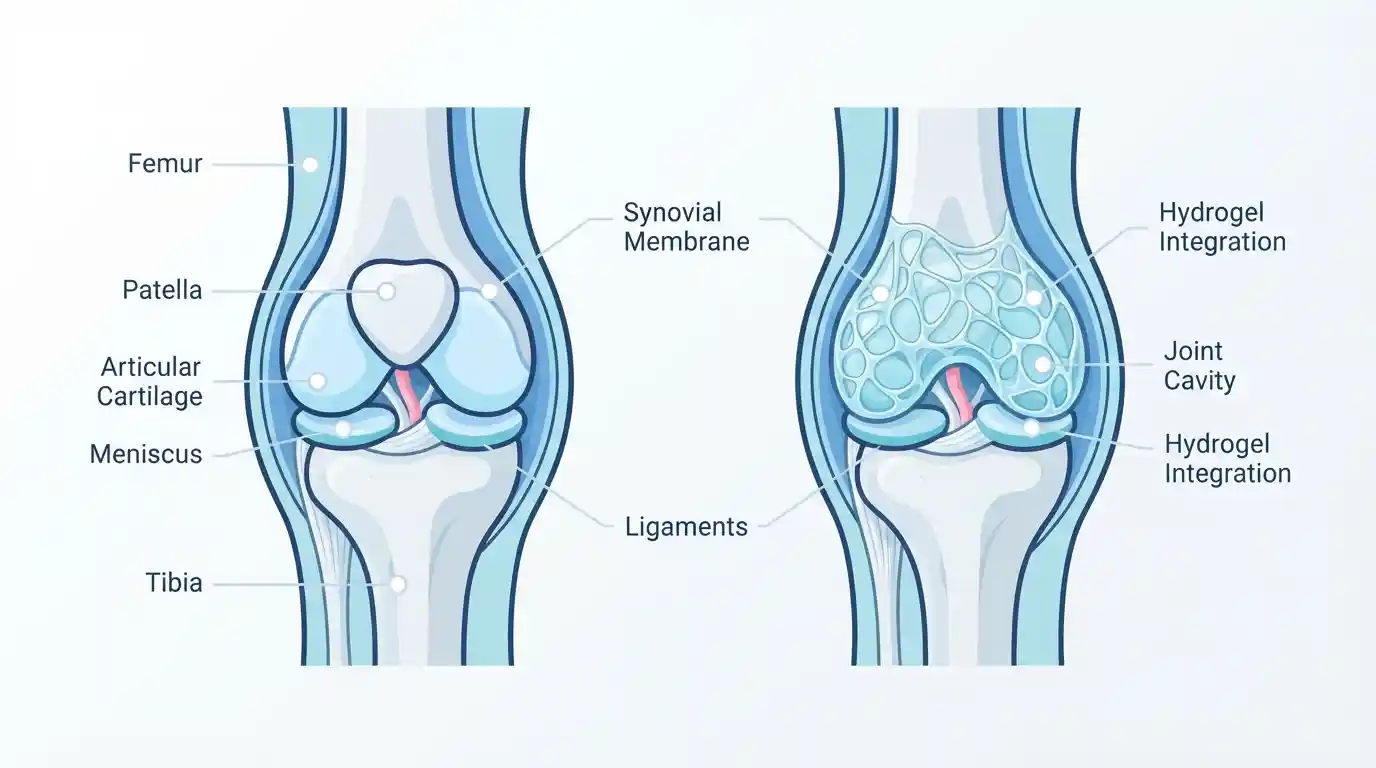
Arthrosamid is a hydrogel that integrates into the synovial lining of the knee. It does not act like a short-term painkiller. It works by improving joint cushioning and stability over time.
The body needs time to adapt.
The knee needs protection in the early phase.
Most patients notice:
- Mild swelling or tightness
- Temporary discomfort at the injection site
- Gradual improvement over weeks
These effects remain normal. They do not signal failure.
Guidance from organizations like NHS and NICE supports careful post-injection management to reduce complications and improve outcomes.
The First 24 to 48 Hours: Critical Recovery Window
This period matters most.
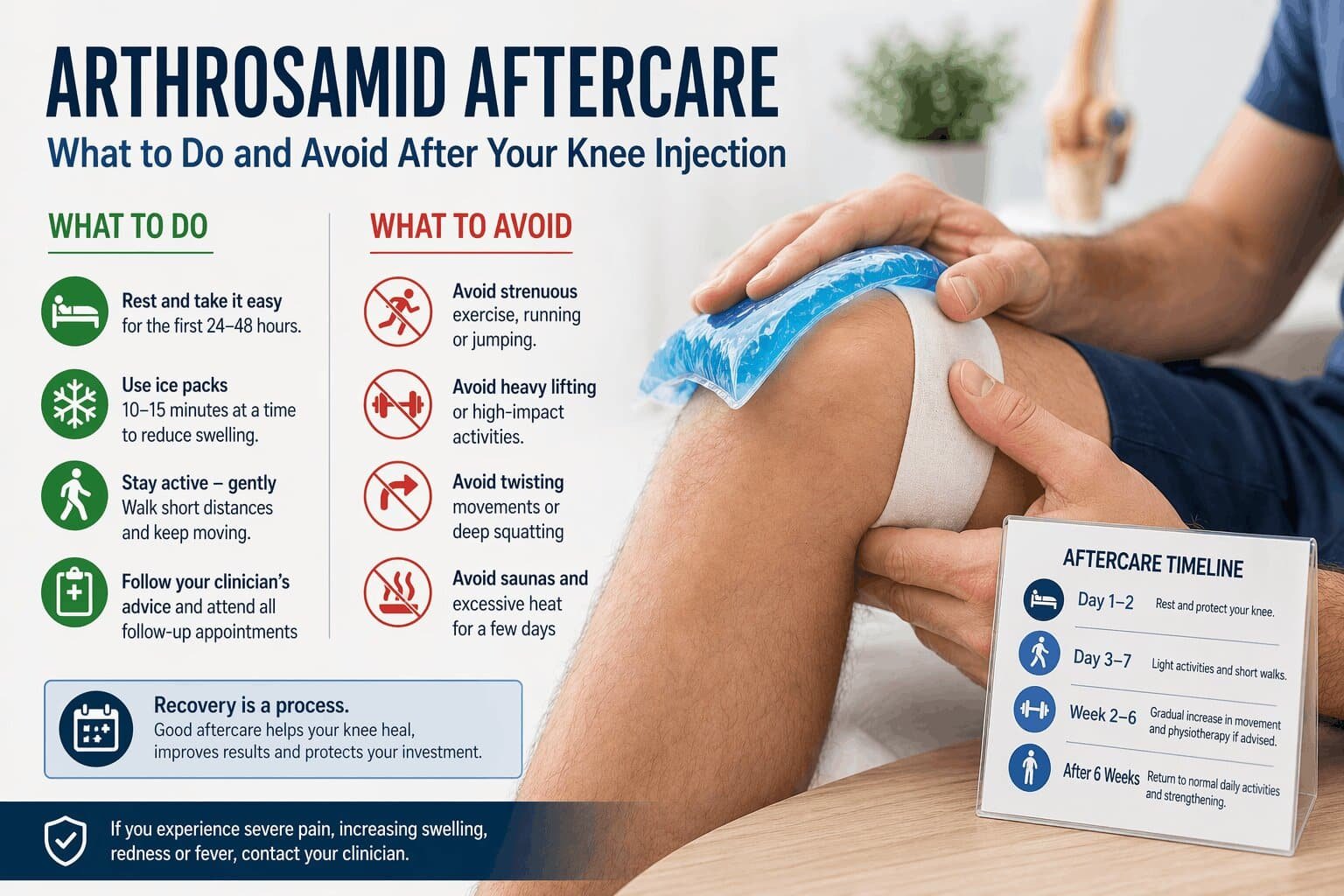
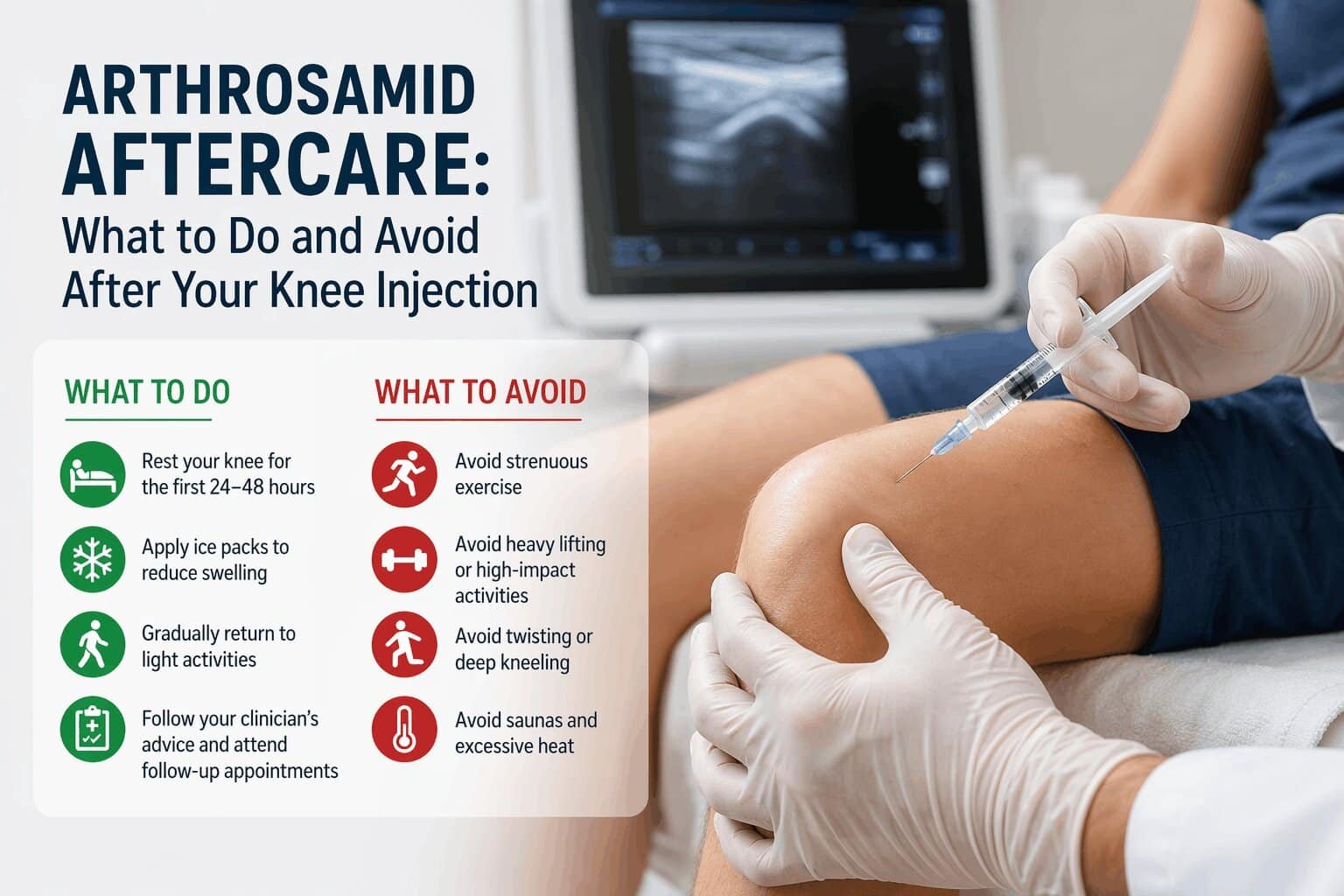
What to Do
- Rest your knee. Keep movement gentle.
- Apply cold packs. Use for 10–15 minutes to reduce swelling.
- Keep the leg elevated. This helps fluid settle.
- Walk short distances only. Avoid strain.
What to Avoid
- No strenuous activity. Avoid gym sessions or long walks.
- No heavy lifting. Pressure can irritate the joint.
- No twisting movements. Sudden turns stress the knee.
Small actions now protect long-term results.

The First Week: Controlled Movement
After the initial phase, movement becomes important.
What to Do
- Resume light daily activity. Walking on flat ground works well.
- Follow clinician advice. Each knee responds differently.
- Stay consistent. Gentle movement supports integration of the hydrogel.
What to Avoid
- No running or jumping. Impact delays recovery.
- No deep squatting. This increases joint pressure.
- No sports activity. The knee needs stability first.
Balance rest and movement. Too much of either can slow progress.
Weeks 2 to 6: Gradual Improvement Phase
This stage brings noticeable change.
Patients often report:
- Reduced stiffness
- Improved mobility
- Less frequent pain
What to Do
- Increase activity slowly. Add walking distance step by step.
- Begin physiotherapy if advised. Structured exercise improves outcomes.
- Focus on muscle strength. Strong muscles protect the joint.
What to Avoid
- Avoid sudden activity spikes. Gradual progression works best.
- Avoid uneven surfaces. They stress the joint.
Consistency drives recovery.
Long-Term Aftercare: Protecting Your Results
Arthrosamid aims to provide long-lasting relief. Some studies show benefits lasting up to two years or more.
Long-term care matters as much as the injection itself.
Key Habits
- Maintain a healthy weight
- Stay physically active
- Strengthen thigh and calf muscles
- Use supportive footwear
What to Limit
- High-impact sports
- Repetitive knee strain
- Prolonged inactivity
Your lifestyle shapes the durability of your result.
Common Symptoms After Injection
Patients often feel concerned about normal reactions.
Mild Swelling
This can last a few days. It usually settles without treatment.
Temporary Pain
This does not mean failure. The joint adjusts to the hydrogel.
Warmth Around the Knee
This reflects mild inflammation. It should reduce gradually.
If symptoms worsen or persist, seek medical advice.
When to Seek Medical Attention
Some symptoms require review.
- Severe pain that does not improve
- Significant swelling
- Fever or redness
- Reduced ability to move the knee
These signs need prompt assessment.
The Role of Follow-Up Care
Follow-up supports recovery.
Clinicians assess:
- Pain levels
- Mobility
- Joint function
They adjust advice based on progress.
- Specialist expertise
- Imaging guidance
- Follow-up support
If patients ignore aftercare, they risk:
- Slower recovery
- Reduced benefit
- Need for further treatment
Proper care helps avoid repeat procedures.
Activity Timeline After Arthrosamid Injection
Day 1–2
Rest and protect the knee
Day 3–7
Light movement and daily activity
Week 2–6
Gradual increase in mobility
After 6 Weeks
Structured activity and strengthening
This timeline supports optimal integration of the treatment.

The Psychological Side of Recovery
Pain affects more than the body.
Patients often feel:
- Anxiety about movement
- Fear of worsening pain
- Frustration with slow progress
Confidence returns gradually.
Education helps reduce fear.
Clear expectations improve satisfaction.
Clinical Perspective on Aftercare
Clinicians emphasis precision and recovery equally.
Dr Syed Nadeem Abbas highlights that correct aftercare supports the biological integration of Arthrosamid and improves long-term joint function.
This reflects modern practice:
- Treat the joint
- Support recovery
- Monitor progress
Comparing Good vs Poor Aftercare
| Factor | Good Aftercare | Poor Aftercare |
| Activity Level | Gradual increase | Sudden strain |
| Pain Outcome | Steady improvement | Fluctuating pain |
| Recovery Time | Predictable | Delayed |
| Long-Term Benefit | Strong | Reduced |
Small decisions shape major outcomes.
Practical Daily Tips
- Sit with your leg slightly elevated
- Avoid crossing your legs
- Use handrails when climbing stairs
- Take breaks during long periods of standing
These habits reduce stress on the knee.
Diet and Hydration
Recovery links with overall health.
Helpful Choices
- Lean protein
- Vegetables
- Omega-3 fats
Avoid Excess
- Processed food
- High sugar intake
Good nutrition supports tissue health.
Sleep and Recovery
Sleep supports healing.
- Keep the knee supported at night
- Avoid awkward positions
- Use a pillow under the leg if needed
Rest improves outcomes.
Setting Realistic Expectations
Arthrosamid does not act instantly.
Patients often notice:
- Gradual improvement
- Peak benefit over months
Patience plays a key role.
Knee pain limits movement, independence, and quality of life. Treatments like Arthrosamid offer a modern approach to long-term relief. Yet, the injection alone does not determine success.
Aftercare defines the outcome. Consistency protects the result. Small daily choices build long-term benefit.
Patients who respect recovery guidelines often achieve better mobility and sustained pain relief. They also gain better value from the arthrosamid injection cost UK, making the treatment a more effective long-term decision.
Recovery does not end in the clinic. It continues at home, in daily habits, and in how the knee gets used over time.
Read More:
Arthrosamid or Surgery? When Injection Is the Better Option for Knee Osteoarthritis
What to Expect During an Arthrosamid Injection Procedure: Step by Step