Most men who walk into a P Shot consultation arrive with one quiet question they have not quite said out loud: is this safe? It is the right question to ask, and it deserves a proper answer — not a dismissal, not a lengthy list of alarming possibilities, but a clear, considered breakdown of what actually happens, how the body typically responds, and what a well-run clinic does to make the experience as smooth as possible.
The reassuring news is that the P Shot has one of the most favourable safety profiles of any regenerative procedure in men’s health. Because the treatment uses platelet-rich plasma drawn from your own blood, there is no foreign substance, no synthetic compound, and no material your immune system does not already recognise. That single fact distinguishes it from a broad category of other injectable procedures and sets a strong foundation for understanding everything else.
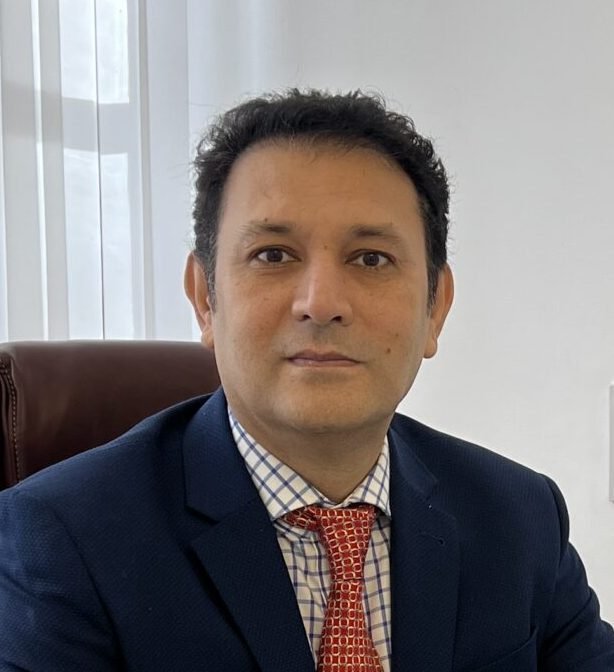
At Dr SNA Clinic on Harley Street, Dr Syed Nadeem Abbas approaches patient safety with the rigour his surgical training demands. As a Member of the Royal College of Surgeons of Edinburgh — whose examinations rank among the most demanding in the world — Dr Abbas brings a standard of anatomical precision and clinical judgement to this procedure that most practitioners in the aesthetic medicine space have never been required to develop. That standard matters more than most patients realise, and by the end of this article, it will be clear why.
Why the P Shot Is Considered a Low-Risk Procedure
The foundation of the P Shot’s safety profile lies in its use of autologous material — that is, material derived from your own body. The process begins with a straightforward blood draw. The blood is then processed in a centrifuge to concentrate the platelets into a platelet-rich plasma preparation, which is then reinjected. Because every component of what enters your body originated from your body, the immune system has no reason to mount a rejection response. Allergic reactions, which are a genuine concern with synthetic fillers and foreign injectables, are extremely rare with PRP.
This does not mean the procedure is entirely without any response — and it would not be accurate to suggest otherwise. But the responses that do occur are, in the vast majority of cases, mild, predictable, and short-lived. They are the body doing exactly what it should do: acknowledging that something has occurred and beginning to heal.
Common Responses: What the Body Does After a P Shot
The most frequently reported experiences after a Priapus Shot are bruising, some localised swelling, and temporary tenderness at the injection sites. These are not side effects in the worrying sense of the word — they are the body’s normal healing response to any injection in well-vascularised tissue. The penis has a rich blood supply close to the surface, which means that minor bruising is simply more visible here than it might be in less sensitive areas.
Bruising, where it appears, typically develops within the first day or two and fades within one to two weeks. Swelling peaks in the first 48 hours and subsides steadily after that. Tenderness at the injection site — a mild ache rather than sharp pain — usually resolves within two to three days and responds well to paracetamol if needed.
The discomfort during the procedure itself is managed carefully at Dr SNA Clinic through a considered anaesthetic protocol. Doctor uses topical numbing cream and, where appropriate, a penile nerve block to ensure the experience is as comfortable as possible. This reflects the approach of a practitioner trained in surgical theatre environments, where managing patient comfort during procedures is a fundamental clinical skill rather than an add-on.
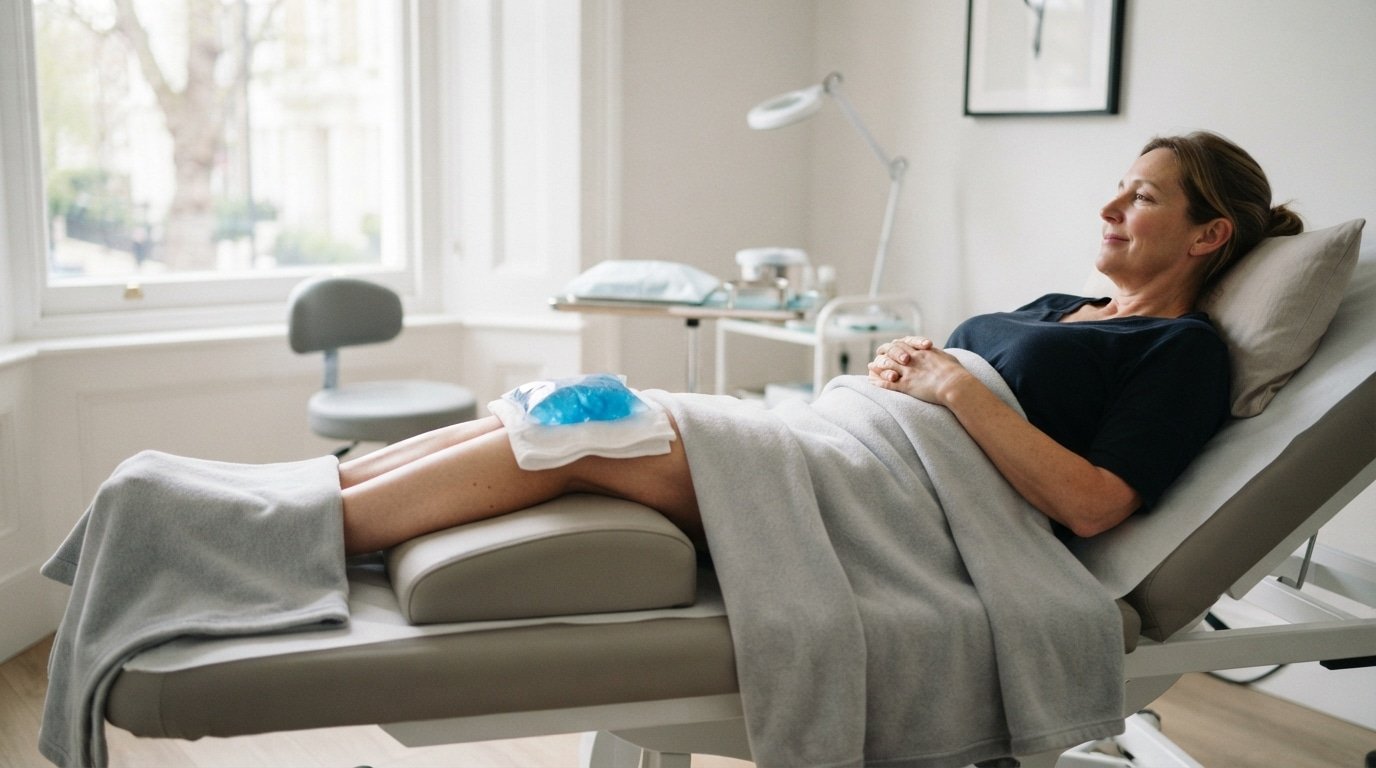
The practical upshot for most patients is that they return to their normal daily routine very quickly. A day or two of taking things gently, avoiding strenuous physical activity, and wearing comfortable clothing is usually all that is required before life returns to normal.
Less Common Responses: What to Be Aware Of
A small number of patients experience responses that go slightly beyond the standard bruising and swelling. These are less common but worth understanding so that, if they arise, you know what to do.
Temporary changes in sensation — heightened sensitivity, mild numbness, or altered feeling in the treated area — occur occasionally in the days following a P Shot. In almost all cases, this reflects the tissue’s response to the injection and resolves as healing progresses. The nerve endings in this area are densely packed and sensitive to any local changes in tissue environment, so a brief period of altered sensation is not unusual and does not signal anything of concern.

Localised infection is possible after any procedure that involves a needle passing through the skin. At a properly regulated clinic operating to clinical-grade aseptic standards — as Dr SNA Clinic does — the risk is kept genuinely minimal through sterile needles, correct skin preparation, and clinical-grade processing of the PRP. Dr Abbas trained at Cambridge, Oxford, and the Royal London Hospital, institutions where infection control is practised to the most exacting standards. Those habits do not change in a clinic setting. If at any point after a P Shot a patient notices signs of infection — increasing redness, warmth, or swelling beyond what is expected — prompt contact with the clinic is always the right step. Early attention to any concern is always better than waiting.
Rare Possibilities: The Full Picture
For completeness, it is worth acknowledging that rare complications — such as a small haematoma, a more significant collection of blood beneath the skin — can occasionally occur when a blood vessel is caught during injection. These are uncommon and resolve over time, but they can cause temporary firmness and more pronounced swelling. The risk of haematoma formation is substantially reduced by the kind of precise anatomical knowledge that surgical training provides. Understanding where blood vessels lie in relation to the structures being treated is foundational surgical knowledge — and it is exactly the kind of knowledge that Dr Abbas’s MRCS training instilled.
Adverse reactions to local anaesthetic agents are rare but possible, as they are with any procedure involving numbing agents. This is a well-understood clinical risk that any fully qualified medical doctor is trained to recognise and manage swiftly.
The Factors That Work in Your Favour
Understanding the P Shot’s safety profile is not just about knowing what can occasionally go wrong. It is equally about understanding what determines whether your experience falls into the straightforward majority. Several factors work significantly in a patient’s favour.
Choosing a fully qualified medical practitioner matters more here than almost anywhere else in aesthetic medicine. Dr Abbas’s combination of surgical training (MRCS), GP-level clinical breadth (MRCGP), and academic grounding in aesthetic plastic surgery (MSc with Distinction, Queen Mary University London) means that his pre-treatment assessment is genuinely comprehensive. He reviews your medical history, your medications, and your overall health — not as a checklist, but as the kind of systemic clinical evaluation that protects patients before a needle is ever involved.
The quality of PRP preparation also plays a meaningful role. PRP produced using clinical-grade centrifugation equipment and correct preparation protocols delivers a consistent, well-concentrated product. The platelets behave predictably, the growth factors are properly preserved, and the tissue response is more likely to be the mild, productive healing reaction the procedure is designed to produce.
Finally, the clinical environment itself matters. A CQC-registered clinic, staffed by registered medical professionals, operating under regulatory oversight — this is the setting in which the P Shot delivers the safety profile that earned it a place in men’s health medicine. Harley Street is not simply a prestigious address; it represents a defined set of professional and regulatory standards that every patient in that environment benefits from.
Frequently Asked Questions
How many P Shots do you need to see results?
This varies between patients and depends on the underlying reason for seeking treatment. Some men notice improvement after a single session; others benefit from two or three. Dr Abbas discusses realistic timelines openly during the pre-treatment consultation — the goal is always to help patients make well-informed decisions, not to create expectations that cannot be met.
Is it worth getting the P Shot?
For the right patient, approached with realistic expectations and proper clinical assessment, the P Shot represents a low-risk, low-downtime option within a broader treatment plan. The European Association of Urology acknowledges mild evidence of benefit in patients with organic erectile dysfunction, and for many men the combination of that potential benefit with the procedure’s reassuring safety profile makes it a credible consideration. The key is ensuring the decision is made in partnership with a qualified clinician who understands your full health picture.
Does the P Shot increase size permanently?
The Clinic is clear on this point: claims of permanent penile enlargement from the P Shot are not supported by scientific evidence. Any temporary changes in appearance in the days following any injection are a result of localised fluid and swelling — they do not represent permanent change. A reputable clinic will always say this plainly.
What should I expect after the P Shot?
Most patients find the recovery period notably unremarkable, which is itself reassuring. Mild tenderness, possible light bruising, and some swelling are the typical experience. These settle within a few days. Avoiding vigorous activity and sexual activity for the first 24 to 48 hours is sensible, and a follow-up conversation with your practitioner a few weeks later helps assess your response properly.
Key Takeaways

The P Shot’s safety profile is one of its most compelling attributes. The use of your own blood products means the immune response concerns that accompany many injectable procedures simply do not apply here. The most common experiences — brief bruising, temporary swelling, and mild tenderness — are normal healing responses that resolve quickly and without intervention.
The quality of your outcome, and the smoothness of your experience, reflects the quality of your practitioner and the environment in which the procedure is carried out. A surgeon trained at the Royal College of Surgeons of Edinburgh, holding both the MRCS and MRCGP alongside an MSc in Aesthetic Plastic Surgery with Distinction, brings a depth of clinical assessment and procedural precision that significantly shifts the risk picture in a patient’s favour.
The P Shot is not a procedure to approach on price alone or without proper assessment. Approached correctly — with full clinical evaluation, clinical-grade preparation, and a qualified, experienced practitioner — it is a procedure with a genuinely reassuring safety record and a growing body of evidence behind it.
If you would like to understand whether the P Shot is the right option for you, a consultation with Dr Abbas at Drsnaclinic on Harley Street begins with exactly that conversation.
Sources
- European Association of Urology (EAU) — Guidelines on Sexual and Reproductive Health, Erectile Dysfunction: https://uroweb.org/guidelines/sexual-and-reproductive-health/chapter/management-of-erectile-dysfunction
- SMSNA Position Statement on Restorative Therapies: https://pubmed.ncbi.nlm.nih.gov/34000480/
- Cleveland Clinic — P-Shot (Priapus Shot): https://my.clevelandclinic.org/health/treatments/p-shot
- NHS — Erection Problems (Erectile Dysfunction): https://www.nhs.uk/conditions/erection-problems-erectile-dysfunction/
- NICE Clinical Knowledge Summaries — Erectile Dysfunction: https://cks.nice.org.uk/topics/erectile-dysfunction/diagnosis/assessment/
- Royal College of Surgeons of Edinburgh: https://www.rcsed.ac.uk